You paid $385 for a Level 2 inspection, and now you have a report full of still frames, depth markings and short findings. This post is a guide to reading it: what each kind of image shows, which findings change what you can do with the fireplace, and what the next booking is for each one. It is written for owners in Torrance and the South Bay who have a report from us in hand, or who want to know what they will get before they book.
How the report is laid out
Our reports follow the chimney from the bottom to the top, in the same order the camera saw it. Each finding has four parts:
- Where: the part of the chimney and, inside the flue, the depth measured from the damper
- What the image shows: one or two still frames taken from the recording
- What it means: whether the fireplace can be used as it is
- What comes next: the repair, its price if this site lists one, or a note that we will measure and quote it
At the end there is a summary that groups the findings into three plain calls: fine to use, fine for now but watch, and do not use until repaired. The full recording comes with the report, so you can scrub to any depth and see the frame yourself.
Reading a clay tile frame
Most older chimneys in Torrance were built with a clay tile flue. On the screen, a sound tile looks like a smooth, even tunnel, light tan or gray under the camera's light, with a thin straight line every couple of feet where one tile meets the next. That line is the mortar joint. When the tunnel looks like that from bottom to top, the flue is doing its job.
Here is what the common problems look like.
A vertical crack
A dark line running up the wall of one tile, sometimes from joint to joint. Heat cracks often appear on the side of the flue nearest the fire, low in the stack, where the tile gets hottest. A single fine crack may be marked "watch". A crack that has opened wide enough to show the brick behind it, or several cracks in one tile, is marked "do not use", because heat and exhaust can reach the masonry and the framing beyond it.
An open joint
Instead of a thin line between two tiles, there is a dark band or a visible gap. The mortar has washed out or never filled the joint. Exhaust can leak through that gap into the space around the flue. One open joint near the top is a different matter from several open joints above the smoke chamber; the report says which one you have.
An offset tile
The tunnel suddenly steps in or out, because one tile has slid sideways on its joint. Ground movement is the usual cause; Southern California chimneys have been through a number of quakes, and tile that shifted then often stays shifted. An offset narrows the flue and leaves a ledge where soot and debris collect. We note how far it has moved.
A missing or broken tile
A section where the clay is gone and the camera sees brick or mortar instead. This is always a "do not use" finding.
Reading a metal flue frame
Houses with a factory-built fireplace have a metal flue instead of clay. Sound metal looks like a bright, even tube with neat seams. The findings we mark are separated sections, where one length of pipe has pulled away from the next; rust, which shows as dark brown patches or holes; and dents or crushed sections. A separated joint in a factory-built flue is a "do not use" finding, because the maker's listing depends on the joints staying locked.
The smoke chamber and damper frames
Below the flue sits the smoke chamber, the funnel between the damper and the first tile. On camera it looks rougher than the flue, because it is brick. We mark missing mortar, loose brick and heavy glazed buildup here. The damper is shown in the open and closed positions, so you can see whether the plate seats and whether the frame has cracked or rusted through.
The roof and attic frames
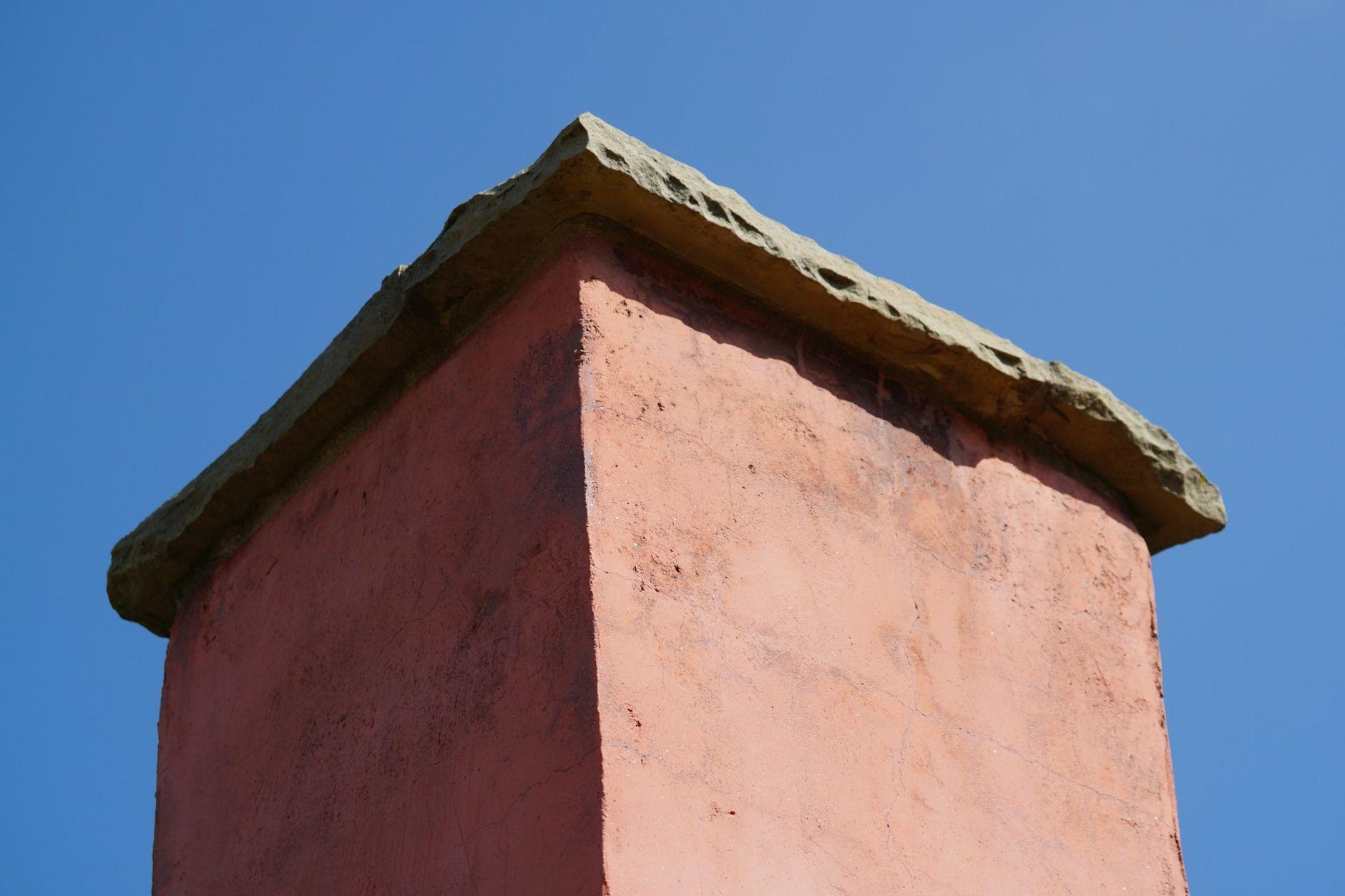
A Level 2 also covers the outside of the chimney from the roof and the part that passes through the attic. Those frames show the crown, the cap, the flashing where the chimney meets the roof, and in the attic, the clearance between the chimney and the nearest wood. Findings here are mostly about water and heat: a cracked crown, a missing cap, flashing that has lifted, or wood framing that sits too close to the brick.
What each finding leads to
This is the part most readers want: what happens next, and what it costs. Where this site has a set price, it is in the report. Where it does not, we come back to measure and send the figure in writing.
| Finding | Usual next step | Price on this site |
|---|---|---|
| Heavy soot hiding the tile | Sweep, then rescan the hidden section | from $410 |
| Cracked or missing tile, several open joints | Stainless relining or tile repair | Measured and quoted |
| Offset tile | Relining, sized to fit past the offset | Measured and quoted |
| Water at the roofline | Trace the source and fix it | $550 to $3,300 |
| Wide stack holding water on its high side | Add a cricket | $440 to $990 |
| The same, with flashing that has failed | Cricket and new flashing together | $660 to $1,650 |
| Cracked crown, damper, chase cover | Repair or replace | Measured and quoted |
| Missing cap, open top | New cap fitted to the flue | quoted after we measure |
Prices on this site come only from the published list; anything else gets its own written figure. If your report has a finding you want priced, send us the finding and the address and we will come back with a number or a measuring visit.
Questions owners ask about their report
Can I keep using the fireplace while I decide? Only if the summary marks the flue "fine to use" or "watch". Anything marked "do not use" should wait for the repair.
The report says "rescan after sweeping". Why? Heavy soot can hide a crack. If part of the flue was too dark to read, we say so rather than guess, and the sweep lets the camera see bare tile.
Can I share the recording? Yes. It is yours. Buyers send it to their agent, sellers put it in their disclosure file, and owners send it to an insurer. We send it to whoever you name.
Will a different company read the same frames the same way? Most of the time, on the clear findings. The value of the recording is that anyone can look at the same frame at the same depth, so a second opinion starts from the same evidence. For a sale, our home sale inspection page explains how the report is used by each side.
What to take from it
A camera report is a map of the inside of your chimney, read from the bottom up. The frames show you what we saw, the depths tell you where, and the summary tells you what you can do with the fireplace today. The table shows what each finding usually leads to and, where we list one, its price.
If something in your report is unclear, write to us through the contact page and we will walk you through that frame.
Want to See Inside Your Own Flue?
Clancy Chimney Experts books flue scans, liner fitting and chimney repair from Torrance. You watch the footage with us, and any work is written up as a quote before it starts.